Some people walk into a room and are quietly taken seriously. Not because of their clothes, their money or their accent. Because of thirty small things they do without thinking. This curriculum teaches you every one of them.
Get the curriculum, $47 $79Instant PDF download

The way you arrive. Where your telephone lives. How you hold your glass. What you say when someone asks what you paid for the house. The thank-you you send, or do not send, two days later.
Nobody will ever tell you that they noticed. They will simply decide, quietly, how seriously to take you. And most people are sending the wrong signals without knowing it, usually out of kindness: thanking too much, apologising too much, insisting on paying, helping to clear a table that is not theirs.
None of it costs a penny to put right. It only has to be learned once.
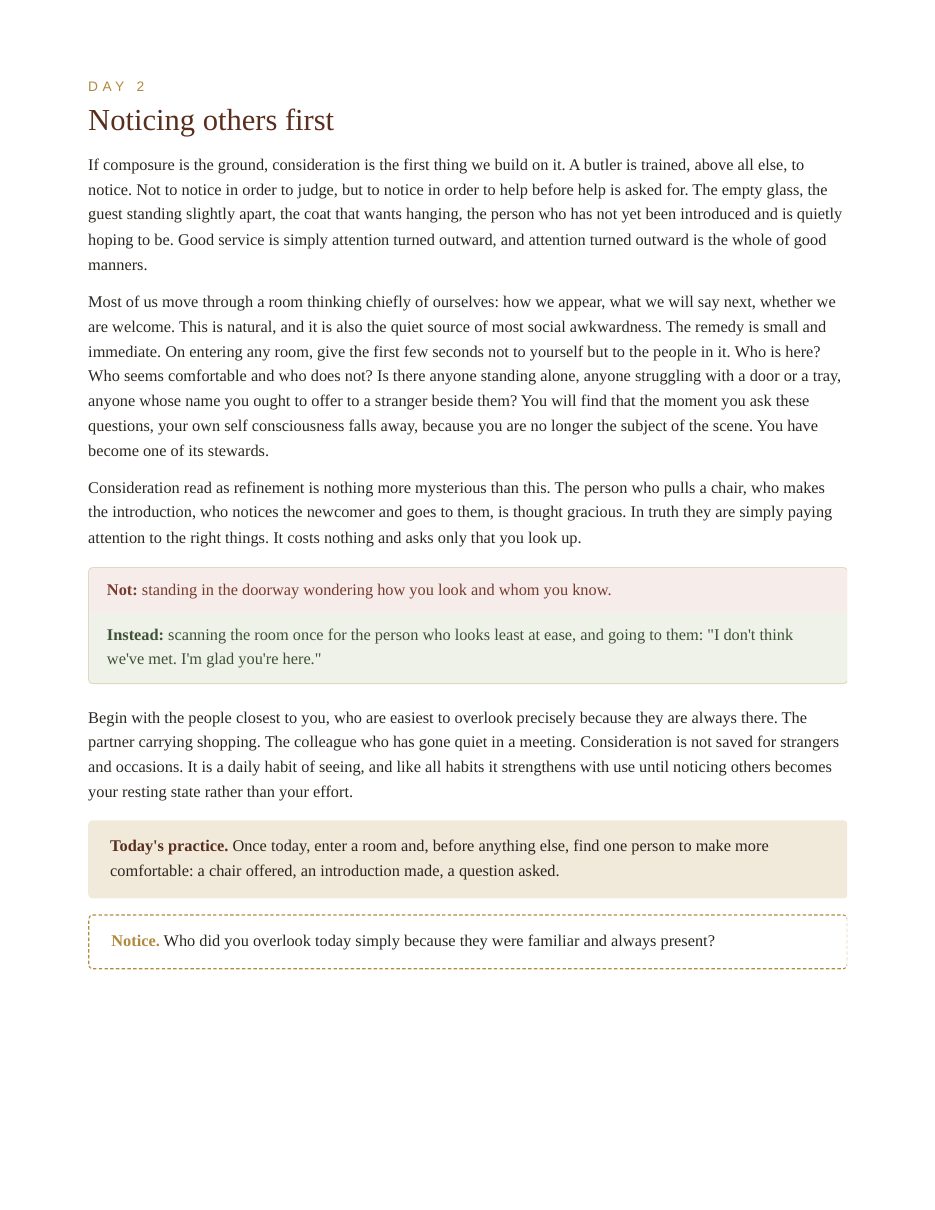
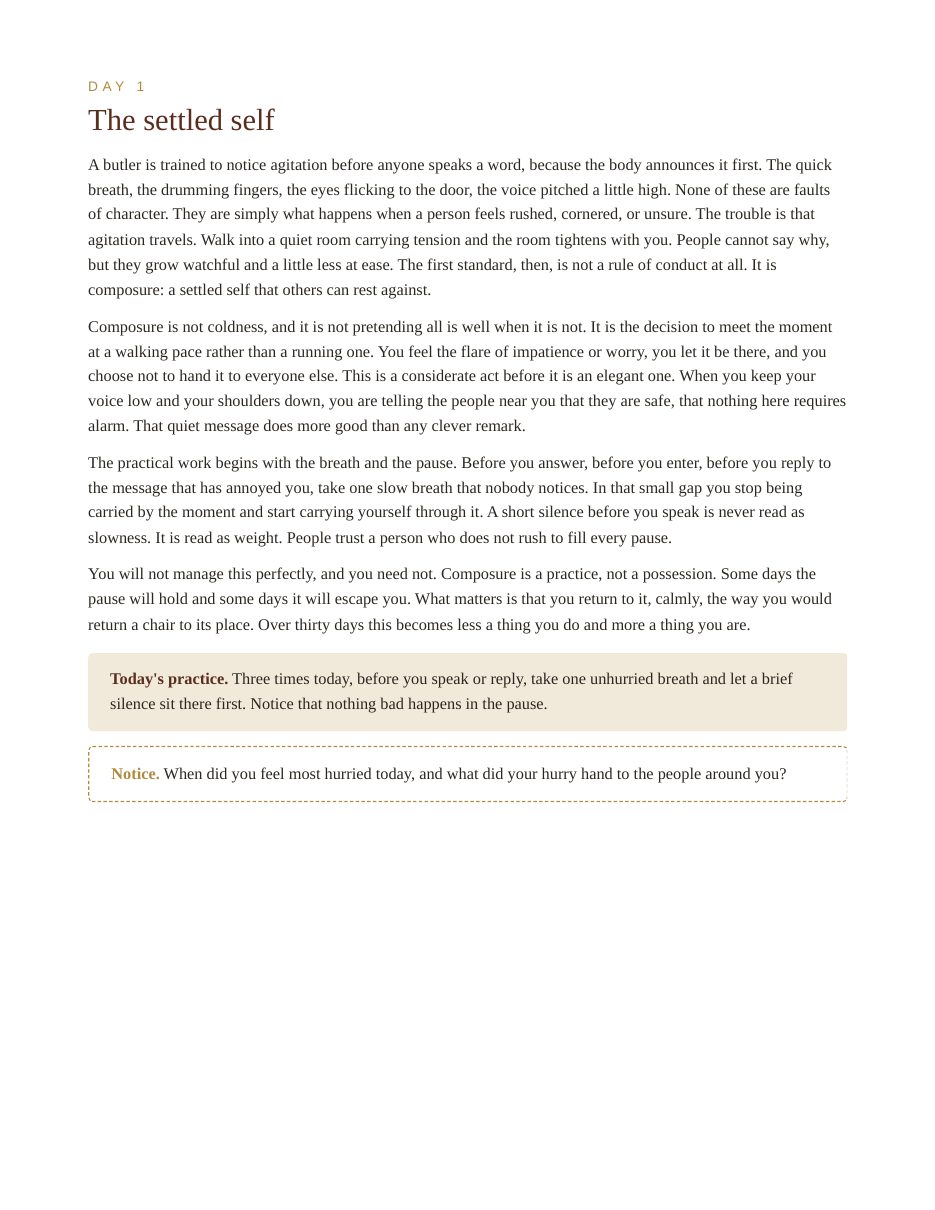
One short lesson each day, about twenty minutes, with one practice to carry out and one thing to notice that evening. Miss a day and simply carry on.
Composure, stillness and the habit of noticing others first. The household standard you keep when nobody is watching, and your own standard, written down.
The first ten seconds: arriving, the greeting and the handshake, posture and the hands, grooming as care, the telephone, voice and pace, and names, including what to do when you have forgotten one.
The place setting read from the outside in, knife and fork in both British and American style, bread, glass and napkin, the questions you answer without answering, and how you speak to staff: the fastest tell of all.
The nice gestures that backfire, being the guest who is asked back, the 48-hour thank-you note, hosting a dinner for four, covering a guest's mistake, and leaving a room well. Day 30 is your graduation.
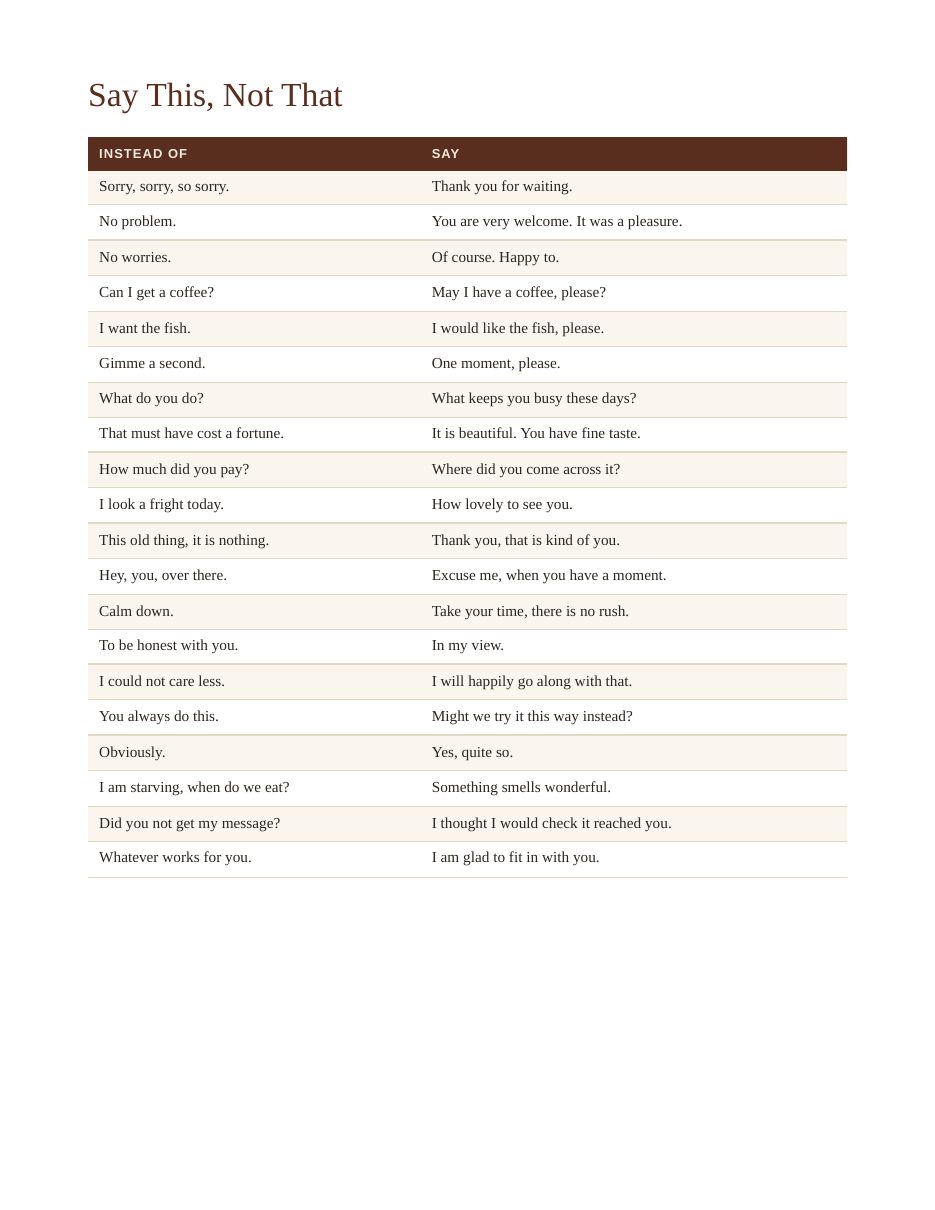
Every lesson tells you what is noticed, why it quietly reads wrong, and exactly what to do or say instead, with the actual words.


"Good manners were never about rules. They were about how you make other people feel. Learn that, and the rules take care of themselves."
Straight after payment you are taken to your download page. Save the PDF to your phone or computer; it opens on any device. Your receipt arrives by email, and if anything goes wrong with the download, simply reply to it.
Both. The lessons are about how you treat people, at the table, at the door and in conversation, which is the same for everyone.
No. Where British and American practice differ, such as holding the knife and fork or answering an invitation, both are explained and both are correct.
About twenty minutes a day for thirty days. You can also read it straight through, and keep the checklist for the night before an occasion.
Arthur Hargreaves is the voice behind the Arthur Hargreaves YouTube channel, where he explains the manners and quiet habits a butler is trained to notice. The guidance in this curriculum draws on long-established published etiquette conventions.